

I did CrossFit for over a decade. Snatches, pull-ups, overhead squats — heavy, for years.
I dealt with consistent pain and would try to address it with some extra PT warm ups or breaks. I thought my issue was form, so I kept pushing good form. Then I found out I had shoulder winging and instability that had been there the whole time — quietly compensating under every single overhead lift I'd ever done.
That's the thing about strength training: intensity doesn't equal readiness. You can lift heavy for years and still not know if your shoulders are actually stable enough to be doing it safely.
So if you're newer to this and nervous about "doing it wrong" — you're not behind. You're actually asking the right question before I ever did.
Here’s the professional assessment I run with every client before designing any training plan and knowing exactly how we will progress:
**Squat** — feet hip-width, arms overhead, sit back like you're reaching for a chair. Heels down, chest up through the full range? This reveals what you need most to get stronger — ankle mobility, glute activation, thoracic flexibility, or core strength.
**Hinge** — soft knees, push hips back, reach for your toes. Do you feel it in your hamstrings and glutes, or tightness in your low back? This tells you how to safely progress lifts like the deadlift.
**Lunge** — step into a split stance, drop your back knee straight down. Front knee stacked over your ankle, or does balance disappear the moment one leg works alone? Any knee pain or core instability? Most people struggle here — and benefit hugely from adding split squats and lunges to their routine.
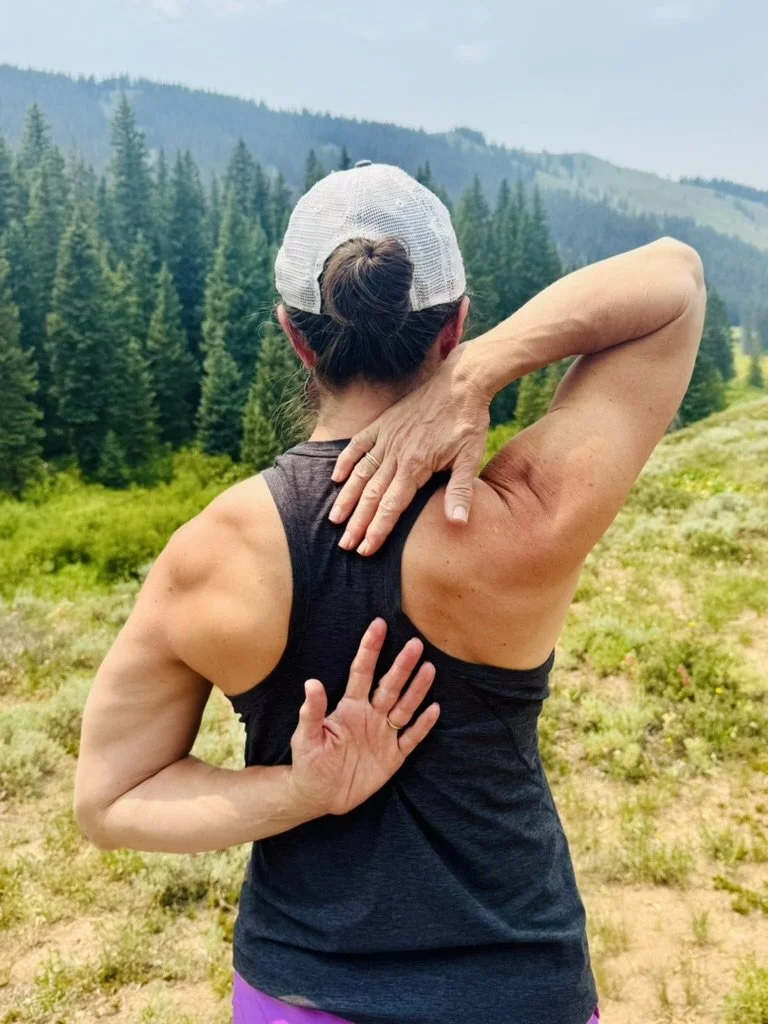
**Push and Pull — the Scratch Test.** Reach one arm up and over your shoulder, the other behind your low back. Try to touch your fingers, or get close. Switch sides. Is one side noticeably different? Does your head jut forward or a shoulder blade wing out? This shows how stable and mobile your shoulders are — critical for every pressing and pulling exercise, and how to progress them.
**Core** — hold a front plank, a side plank each side, then a reverse plank. Where does form hold steady, and where do your low back or hips sag or shake first? A stronger core builds stronger shoulders and hips, and vice versa.
Celebrate wherever you felt strong! Wherever you felt like you were bracing or compensating — that's your actual starting line, whether or not a program ever told you so.
This is exactly how I start with every client, before a single rep of programming gets written. Your imbalances tell us what needs support before it needs intensity. Your history tells us what progression should look like this month, not what a template says on paper. And we reassess as you go, so the plan keeps being built around the body you actually have.
Run this check yourself today. If you want it turned into a real plan — reassessed instead of repeated — that's exactly the work I do.